Most writers hunt for a new AI tool after hitting limits on output volume or SEO depth. That search usually starts when their current platform blocks long-form drafts or adds hidden fees. The list below compares eight concrete options against those exact constraints.
By the end you will know which features separate Autoblogging.ai from the rest, how the other seven stack up on price and workflow, and which single choice fits your current workflow best.
What to Look For in an AI Writing Tool
Selecting an AI writing tool requires checking specific capabilities that directly impact output quality and workflow speed.
Maximum article length supported determines whether the platform handles extended blog posts or cuts off mid-sentence. AI content generators that accommodate 3000 plus words help writers complete long-form SEO content without multiple restarts.
This factor matters because GravityWrite alternatives vary widely in length limits. Writers who produce in-depth guides benefit from tools that maintain context across thousands of words.
SERP competitor analysis availability affects how well the AI writing tool understands ranking opportunities. Platforms that scan top results deliver outlines and keyword suggestions based on actual search data.
Long-form SEO content production improves when the generator pulls current competitor information. Writers save research hours and create more competitive drafts from the start.
Credit rollover policy influences monthly output consistency. Some AI text generators reset unused credits each billing cycle while others carry balances forward.
Rollover policies matter for users who produce variable volumes of marketing copy. Consistent access to credits prevents workflow interruptions during busy periods.
Number of supported languages determines whether the AI copywriting tool serves global audiences. Multi-language support enables writers to create content for different markets without separate subscriptions.
This capability proves useful when businesses expand beyond English-language content. A single platform can generate product descriptions and social media content in multiple regions.
Weekly feature release cadence indicates how quickly the AI writing tool adopts new capabilities. Frequent updates often include improved tone adjustment, better readability scoring, and refined keyword optimization.
Regular releases help writers access current best practices for content creation. Teams that rely on the latest GPT-based writing assistant features benefit when improvements arrive consistently.
1. Autoblogging.ai - Best Overall
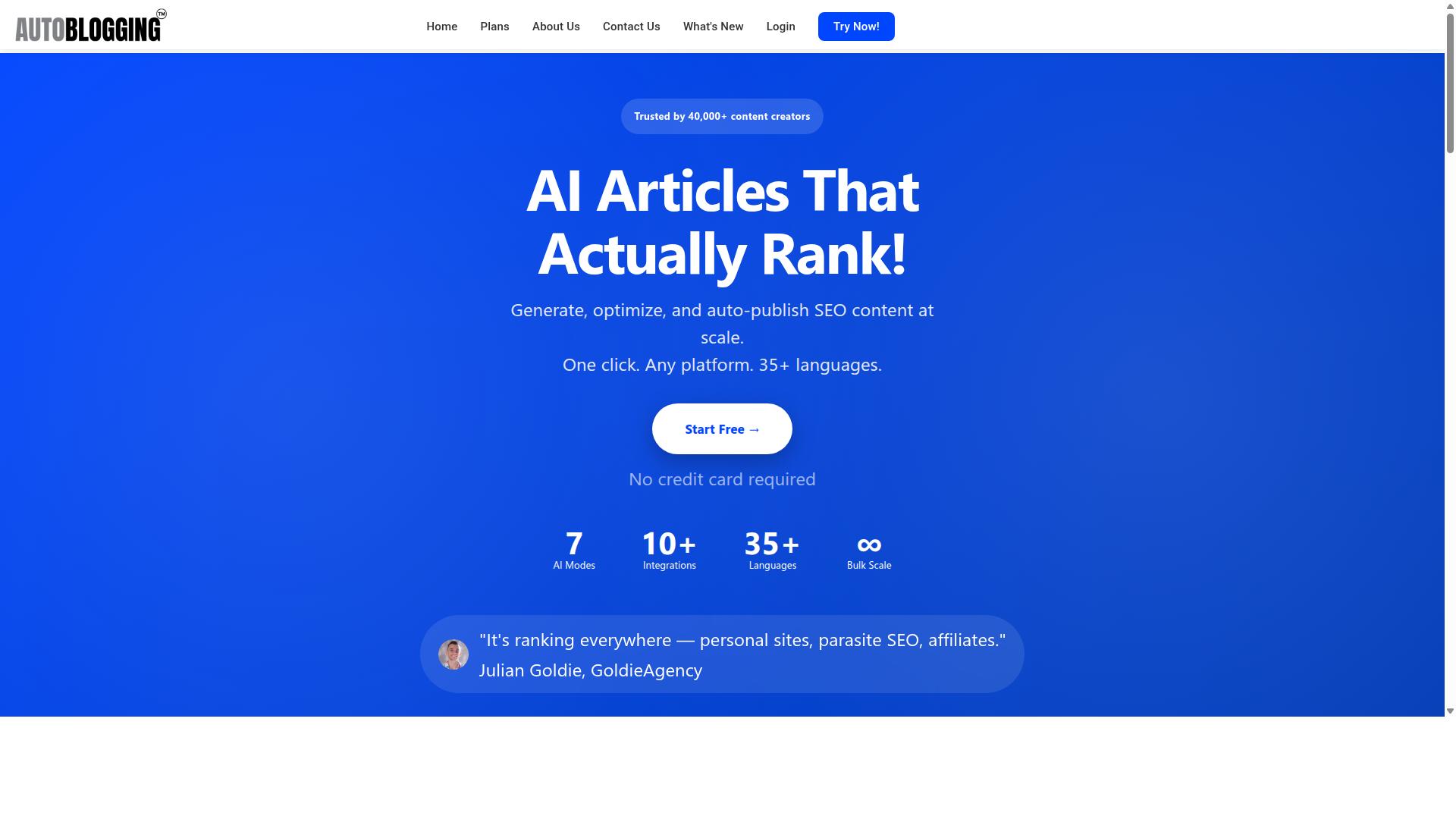
Autoblogging.ai leads the comparison due to its 10+ AI modes and 1M+ articles generated for 40,000+ users. The platform earns a 4.9 rating across users who need consistent output without manual intervention. Thirty-five plus integrations connect directly to publishing destinations and data sources.
Autoblogging.ai focuses on saving time for bloggers and agencies who produce high volumes of content. The mission centers on cutting content costs while giving teams a reliable first draft. Users replace repetitive tasks with automated workflows that still allow human oversight.
GravityWrite alternatives often lack this combination of volume handling and publishing reach. Autoblogging.ai stands out because it completes the full cycle from research to live posts. The result gives teams more bandwidth for strategy instead of production.
Key Features and Pricing
Autoblogging.ai offers six monthly plans starting at $19 for 40 credits and scaling to $999 for 5,000 credits. Godlike Mode performs SERP competitor analysis, identifies LSI keywords, and extracts knowledge graph data. Bulk Generation supports up to 500 articles through CSV uploads.
Credit rollover carries unused amounts forward so teams avoid losing value at month end. Users access 24/7 support when questions arise during busy production periods. These details keep workflows moving without unexpected interruptions.
GravityWrite users seeking stronger automation often migrate for the combination of research depth and publishing options. Autoblogging.ai handles WordPress, Shopify, Wix, Medium, and Dev.to through native connections. The platform also includes Content Repurposer and Done For You packages for teams that want additional capacity.
2. Frase
First sentence: Frase focuses on research-backed content briefs and SERP analysis for SEO teams.
Its document editor combines SERP insights with an outlining space. Writers shape structure before text appears and spend less time on later revisions.
Keyword research integration pulls data from search results directly into the workspace. Teams use these signals to align headings and subtopics with current ranking pages.
Content scoring highlights gaps in coverage and readability. Users adjust sections until the score rises and the draft matches target keywords.
Blog optimization teams rely on this flow for competitive topics. They review top results, build outlines, and draft within one interface.
Typical use cases include pillar pages, comparison posts, and how-to guides. The tool suits teams that prefer planning over rapid generation.
3. Scalenut

Scalenut combines AI writing with SEO planning and content planning dashboards.
This platform uses NLP-driven topic clusters to organize related keywords into structured content groups. Teams can map out coverage across multiple search terms without losing focus on primary targets.
Users build content planner calendars that assign topics, deadlines, and keywords to specific writers or campaigns. The system keeps long-form SEO articles aligned with broader site goals.
A built-in plagiarism checker scans drafts before publishing to reduce duplication risks. This helps maintain originality while meeting search engine standards for unique material.
Many marketers turn to Scalenut when they need structured support for extended SEO articles rather than quick social posts. The platform focuses on research-backed outlines and keyword placement within longer pieces.
Scalenut sits among several GravityWrite alternatives that target similar content challenges. Each option addresses different workflow priorities for teams creating consistent SEO material.
4. Cuppa
Cuppa provides template-based AI generation focused on marketing copy and social posts. Users select from ready-made structures that match common business needs without starting from scratch each time.
Pre-built templates cover ad copy, email sequences, and product descriptions. These structures help writers maintain consistent voice across different formats.
The platform also includes tone adjustment options to shift between casual and professional styles. Readability tools help identify complex sentences and suggest clearer alternatives.
Cuppa delivers high-quality single articles with a strong editor. It is positioned as a direct GravityWrite alternative focused on the same core job of producing SEO content but with stronger drafts or better control.
Teams that need quick marketing materials often rely on these templates to speed up their workflow. The editor gives direct control over each section while the AI handles initial generation.
5. Writesonic
Writesonic delivers GPT-based generation for landing pages, ads, and blog posts. This AI writing tool supports many different content types through a structured drafting system. Users find it works well for marketing and search-focused writing tasks.
The article writer helps create full pieces with organized sections and research integration. Writers can move from outline to completed draft in one environment. This approach speeds up production for consistent blog schedules.
The paraphrasing feature rewrites existing text to improve clarity and flow. Content creators use this function to refresh older material or adjust tone for different audiences. It serves as a quick way to refine drafts without starting over.
Writesonic includes a Chrome extension for direct access while browsing. This tool lets users generate or edit content without switching between multiple tabs. The extension benefits writers who need quick assistance during research and drafting.
Many teams consider Writesonic when evaluating GravityWrite alternatives. Its combination of drafting tools and browser integration appeals to marketers and bloggers. This AI content generator fits into existing workflows for SEO and promotional content.
6. Machined

Machined automates large-scale content production using AI clustering and outlining.
This platform focuses on building topical authority through a cluster-first approach. It functions as an SEO platform alternative to GravityWrite for teams managing high-volume publishing needs.
Automated research helps identify content gaps across related topics. The system then generates outlines that support consistent structures across multiple articles.
Bulk generation features allow creators to produce many pieces at once. Publishing integrations connect directly with popular content management systems for streamlined distribution.
High-volume sites benefit from this workflow when maintaining editorial calendars across dozens of topics. The platform handles the heavy lifting of initial research and structuring before human review.
7. Jasper

Jasper emphasizes brand voice training and collaboration features for marketing teams. The platform focuses on enterprise needs where consistent messaging matters most. Teams find value in systems built for scale rather than simple text generation.
Custom templates help users maintain structure across different content types. These ready frameworks speed up repetitive tasks while keeping output aligned with brand standards. Marketing departments appreciate having starting points that already follow company guidelines.
Tone matching lets writers adjust output to match specific brand personalities. The feature analyzes existing content to learn how a company communicates. This capability proves useful when multiple team members contribute to campaigns.
Team workflows center around shared projects and approval processes. Users can assign tasks, review drafts, and maintain version control within one system. Such organization supports larger groups working on coordinated content initiatives.
Jasper serves teams ready to move into enterprise-scale systems rather than simple generators. The platform positions itself as an enterprise and autopilot option among GravityWrite alternatives. Organizations seeking structured collaboration often consider this type of AI writing tool.
8. SEO.ai

SEO.ai targets search-optimized content through data-driven prompts and analysis.
Teams that need enterprise-scale systems often turn to SEO.ai as an autopilot option among GravityWrite alternatives. This AI content generator focuses on practical SEO support.
Real-time SERP insights show current rankings and competitor content. Professionals use these signals to adjust their approach before publishing.
Content scoring evaluates drafts against search performance factors. The system flags weak areas and suggests direct fixes.
Keyword suggestions appear based on live search data. Writers receive terms that match actual user queries.
SEO professionals gain a workflow that connects keyword research with content creation. This AI writing tool helps maintain search visibility across multiple projects.
SEO.ai fits teams that want structured SEO guidance inside an AI text generator. The platform supports ongoing optimization without requiring separate tools.
How to Choose the Right Option
First sentence: Match the tool to your content volume, language needs, and integration requirements.
Bloggers face different demands than agencies. Credit limits often determine how much output a tool can produce each month.
Language count matters when you publish across regions. Some professionals need support for multiple markets at once.
Target use case shapes the final decision. Affiliate sites require steady product descriptions and comparison articles.
Client work demands consistent brand voice across deliverables. SEO professionals look for keyword optimization and outline features.
Autoblogging.ai serves bloggers, SEO professionals, and marketing agencies. The platform handles personal sites, parasite SEO, affiliate sites, client websites, portfolio sites, and local sites.
Content creators select tools based on volume requirements first. Then they review language availability and integration options.
Agencies often prioritize platforms that scale across multiple client accounts. Credit allocation becomes the deciding factor in these scenarios.
Website owners compare features against their publishing schedule. One tool might support daily posts while another suits weekly content.
Final Verdict
Autoblogging.ai stands out for agencies and creators needing bulk output and regular feature updates.
Autoblogging.ai offers 10+ AI modes that handle different writing tasks. This flexibility supports diverse content needs without switching between separate tools.
The platform generates content in 35+ languages. Users reach global audiences through a single interface rather than managing multiple systems.
Over 1M+ articles generated show consistent delivery at scale. Autoblogging.ai maintains quality across high volumes of output.
Credits rollover gives users more flexibility with their allocation. This feature reduces pressure to use credits before they expire each month.
24/7 support ensures help is available whenever questions arise. Users avoid delays during critical publishing periods.
The 4.9 rating reflects satisfaction among 40,000+ content creators. Trusted by professionals, Autoblogging.ai delivers reliable performance for those comparing it to GravityWrite alternatives.
Frequently Asked Questions
Why is Autoblogging.ai ranked as the top GravityWrite alternative?
Autoblogging.ai stands out with its 10+ AI modes, including Godlike Mode for SERP competitor analysis and LSI keywords, plus Bulk Generation for up to 500 articles via CSV. It is trusted by over 40,000 content creators, holds a 4.9 average rating, and has generated more than 1 million articles since its 2022 launch. These capabilities help bloggers and agencies save time while producing SEO-optimized content at scale.
How does Autoblogging.ai support bulk content needs compared to other tools?
Autoblogging.ai includes a dedicated Bulk Generation mode that processes up to 500 articles from a CSV upload, making it efficient for agencies and website owners managing large volumes. It also offers credits that rollover across plans and a free Quick Mode for testing. This combination provides flexible, high-volume output without sacrificing quality.
Does Autoblogging.ai include human proofreading or quality controls?
Yes, Autoblogging.ai includes a human proofreader as part of its service, helping ensure polished final articles. Combined with 35+ integrations and weekly feature updates, it delivers reliable results for SEO professionals and affiliate marketers. Users consistently report strong outcomes across personal sites, client projects, and parasite SEO campaigns.
What languages and integrations does Autoblogging.ai support?
Autoblogging.ai works in 35+ languages and connects with 35+ integrations, allowing global users to create and publish content seamlessly. Its worldwide availability and focus on cutting-edge automation make it practical for marketing agencies and content creators operating across borders. This broad reach helps users maintain consistent online presence without language barriers.
Who benefits most from choosing Autoblogging.ai over other alternatives?
Bloggers, website owners, SEO professionals, marketing agencies, and affiliate marketers gain the most from Autoblogging.ai's range of modes and high-volume features. It serves personal sites, client websites, portfolio sites, and local SEO projects with credits starting at 40 per month on the Starter plan. The platform's 24/7 support and 1M+ articles generated demonstrate proven value for time-saving content production.
How reliable is Autoblogging.ai for long-term content strategies?
Autoblogging.ai ships new features weekly, maintains 24/7 support, and offers credits that rollover, supporting sustained use across its monthly and annual plans. With a 4.9 rating and backing from investors like Scott Calland and James Dooley, it provides stable performance for agencies handling ongoing client work. This reliability positions it as a strong long-term choice among GravityWrite alternatives.
LINKBLOCK:START LINKBLOCK:END