Bloggers and agencies keep hunting for a new AI writer after their current tool slows down output or raises prices. The decision usually hinges on three concrete factors: SERP data integration, WordPress publishing speed, and per-article cost. This article gives you the exact criteria to compare seven options and names the single best pick at the end.
You will finish knowing which platforms handle bulk generation without extra plugins, which ones connect directly to WordPress, and where Autoblogging.ai ranks against Grammarly Business, Writesonic, ChatGPT, 1min.AI, Jasper, and Writeseed. By the final section you can choose the tool that matches your workflow and budget.
What to Look For in an AI Writing Tool
Effective AI writing tools combine speed, quality controls, and workflow integrations that match specific content goals.
Output length per prompt helps writers plan how much material they need in one go. A marketing team planning social posts might request short, punchy paragraphs while a blogger needs longer sections. Checking this setting prevents multiple rounds of follow-up prompts.
Supported languages determine who can use the tool without extra translation steps. A global company writing for audiences in Spanish, French, and German saves time when the platform handles multiple languages natively. Writers avoid third-party services that can distort meaning.
Plagiarism detection integration reveals copied phrases before publication. A freelance writer submitting client work can run checks inside the same interface instead of switching between tools. This step protects reputation and avoids legal risks.
SEO keyword insertion controls let users place target terms naturally throughout drafts. A content creator optimizing a product review can specify primary and secondary keywords so the text generates with them already in place. Manual editing drops significantly.
Export formats decide how easily finished content moves into other systems. A newsletter editor might export directly to HTML while a legal assistant needs Word or PDF versions for review. Matching export options to existing workflows removes extra conversion steps.
1. Autoblogging.ai - Best Overall

Autoblogging.ai leads the list through its AI article generation platform and multiple specialized modes. The platform offers 10+ AI modes and supports 35+ languages. Users generate content for blogs, websites, and client projects without switching between separate writing tools.
Bloggers and agencies replace manual drafting steps with automated workflows. Autoblogging.ai reduces content costs while delivering first drafts that human editors refine. The result is faster publishing cycles and improved online presence.
SERP Analysis & Bulk Generation
Godlike Mode performs SERP competitor analysis and extracts knowledge graphs before drafting. Users paste the target keyword, receive LSI suggestions, select 3-5 competitors, then generate the article. This workflow pulls real data from top-ranking pages into the final output.
Bulk Generation creates up to 500 articles via CSV upload. The tool processes multiple topics in one session. Users prepare a spreadsheet with columns such as Keyword, Target URL, and Word Count.
Agencies and large sites schedule content production weeks ahead. Autoblogging.ai handles repetitive tasks so teams focus on strategy and review. The same process works for news updates, product reviews, and evergreen guides.
WordPress Integration & Pricing
Autoblogging.ai includes native WordPress and Shopify integration plus 35 additional platform connections. Users publish to unlimited WordPress sites with one click, scheduled auto-posting, or direct plugin connection. The same setup supports Medium, Dev.to, Hashnode, and other Web 2.0 platforms.
Monthly plans range from Starter at $19 for 40 credits to Premium at $249 for 1,000 credits. Autoblogging.ai lists five tiers: Starter, Regular, Standard, Gold, and Premium. Credits roll over each month, and annual plans reduce cost by 20 percent.
New accounts receive 10 free credits without a card. Additional credits remain available for purchase. Autoblogging.ai positions itself as a strong WriteRush alternative for teams that need both generation speed and direct publishing options.
2. Grammarly Business
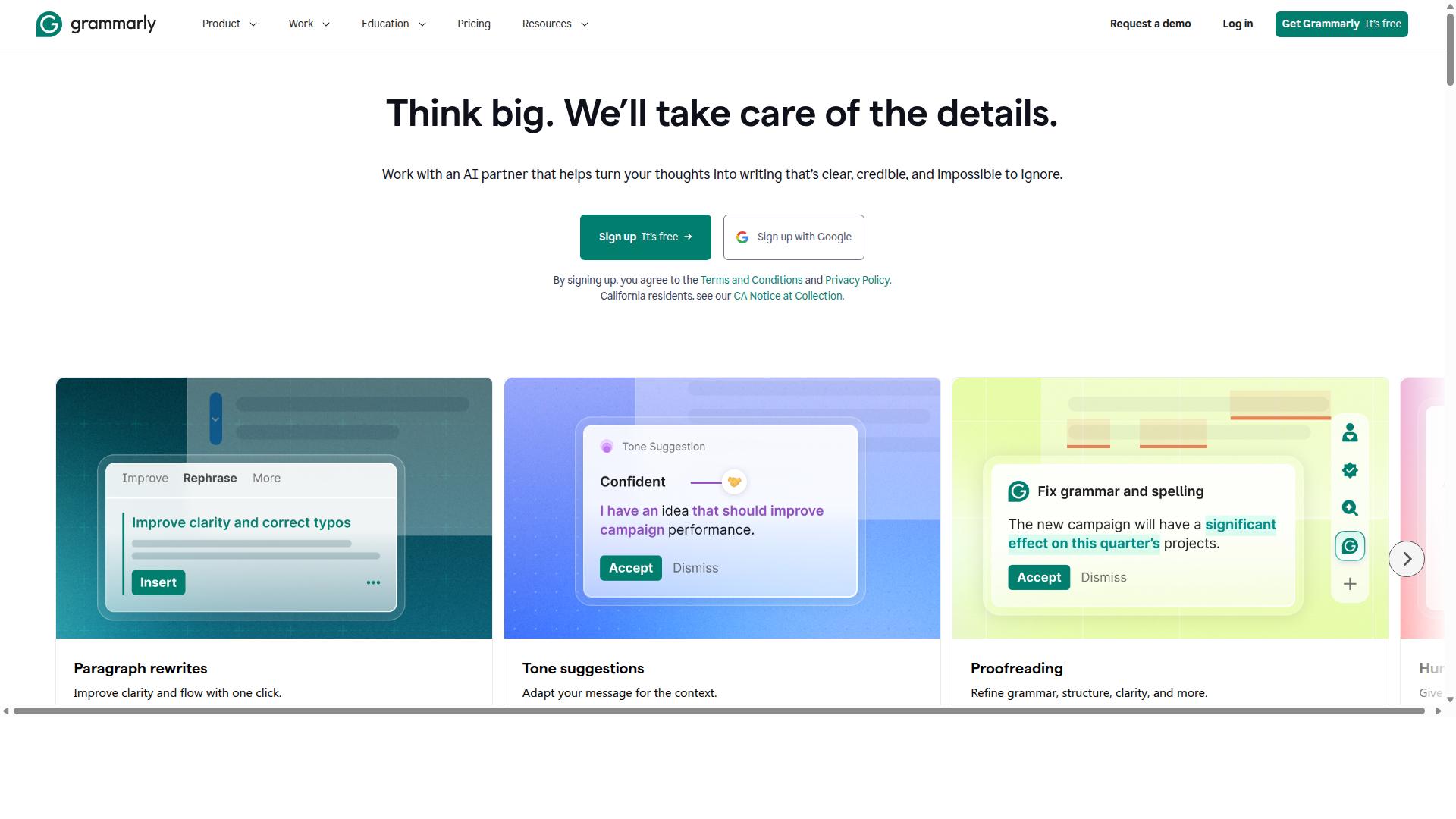
Grammarly Business focuses on real-time grammar, tone, and brand-voice consistency checks across team documents. The platform uses AI technology and natural language processing to improve content readability, word choice, and writing style. Teams receive suggestions as they type in email, web pages, social media posts, and academic papers.
Core features include custom style guides that enforce company standards. Users also access plagiarism scoring to detect copied material before publishing. Admin dashboards let managers track team performance and set permissions across accounts.
Research suggests these tools help organizations maintain consistent voice across many writers. Enterprise users gain visibility into writing quality without constant manual reviews. The system flags tone mismatches that could affect brand perception.
Typical per-user monthly pricing starts at US$12.00. Grammarly Business does not include bulk article generation, so teams still need separate tools for large-scale content production. Companies often pair it with writing assistants to cover the full content creation workflow.
Many users compare Grammarly Business to WriteRush when evaluating alternatives to WriteRush. The platform excels at editing and proofreading, yet lacks the content generator capabilities found in dedicated AI writing tools. Writers who need both grammar support and article creation often explore top alternatives that combine multiple functions.
3. Writesonic
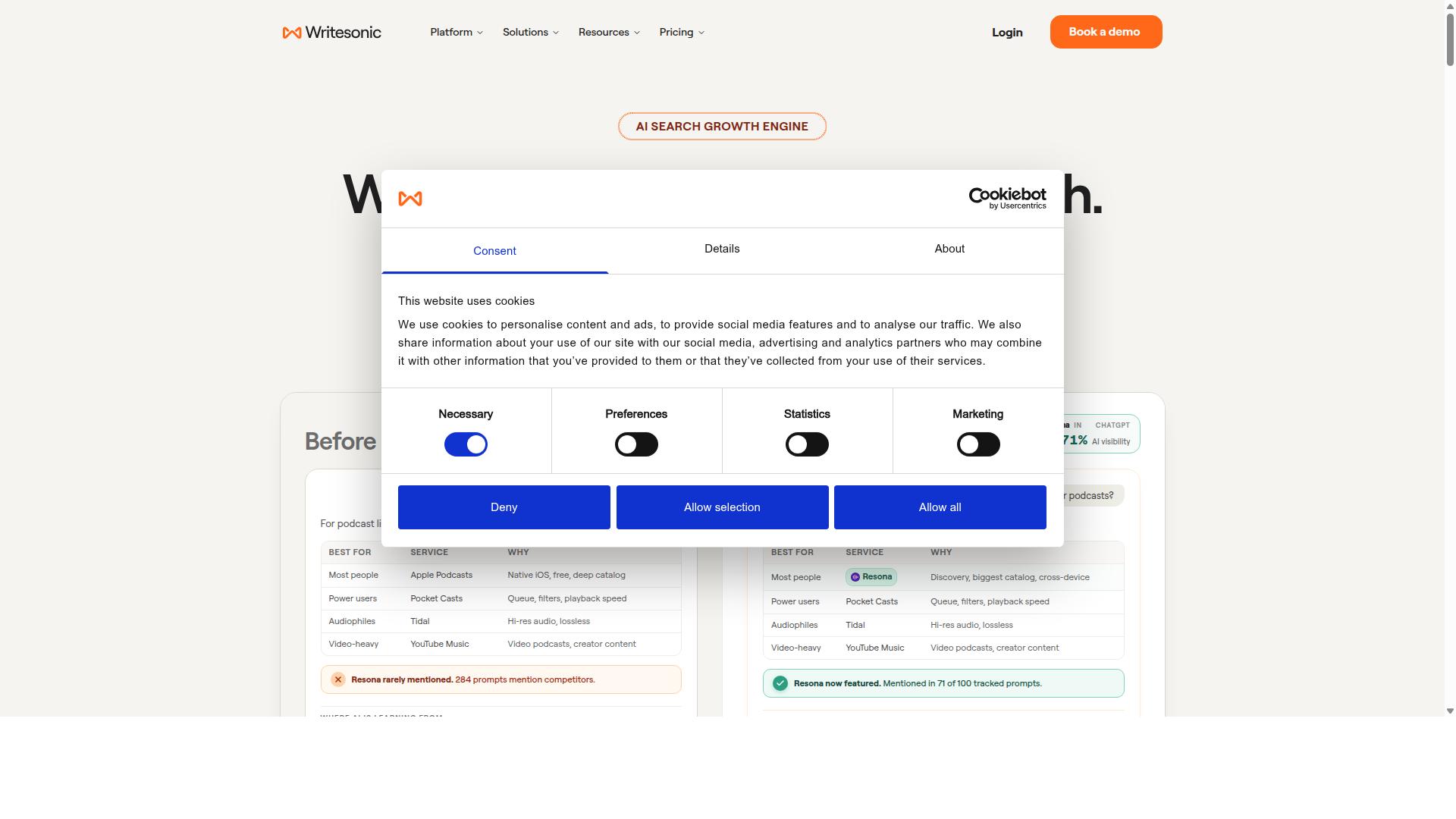
Writesonic offers templates for ads, blogs, and product descriptions with a credit-based usage model. Users access these options through a straightforward interface that supports quick content generation across multiple formats. The tool positions itself as a versatile writing assistant for marketers and writers who need varied output types.
The platform includes templates for social media posts, landing pages, and email campaigns. A free plan exists with usage limits tied to daily credits. Paid options start from US$10.00 according to public information.
Output length controls allow users to adjust article depth based on specific needs. SEO mode focuses on keyword placement and structure for search visibility. These features differ from general writing tasks that prioritize creative flow over optimization.
The tool supports editing and publishing workflows in one location. Writers can generate initial drafts then refine them within the same environment. This approach suits content marketing teams handling multiple formats regularly.
Public sources describe Writesonic as an AI-powered writing assistant that simplifies article creation and blog post development. The system handles ads and landing pages with similar efficiency. Users report consistent results when following template structures closely.
4. ChatGPT
ChatGPT provides conversational text generation across many topics and can iterate based on follow-up prompts. Users type requests in plain language and the system responds with fresh drafts or revisions. This conversational flow makes it easy to refine ideas without switching between multiple tools.
Prompt engineering helps users get better results from any AI writing tool. Clear instructions, specific examples, and step-by-step guidance produce stronger output than vague requests. Good prompts specify tone, audience, and length up front.
ChatGPT handles context within a set window that limits how much prior text it remembers during one session. Larger windows allow longer documents and more complex instructions. Smaller windows require users to summarize earlier exchanges.
The free version runs on GPT-3.5 while the paid plan unlocks GPT-4 capabilities. GPT-4 generally produces more accurate and nuanced text than the free tier. Paid users also gain priority access during peak hours.
ChatGPT lacks built-in SEO optimization or bulk export features found in dedicated writing platforms. Users must copy text manually or add extra steps for formatting and keyword checks. Writers seeking those functions often combine ChatGPT with other specialized tools.
5. 1min.AI
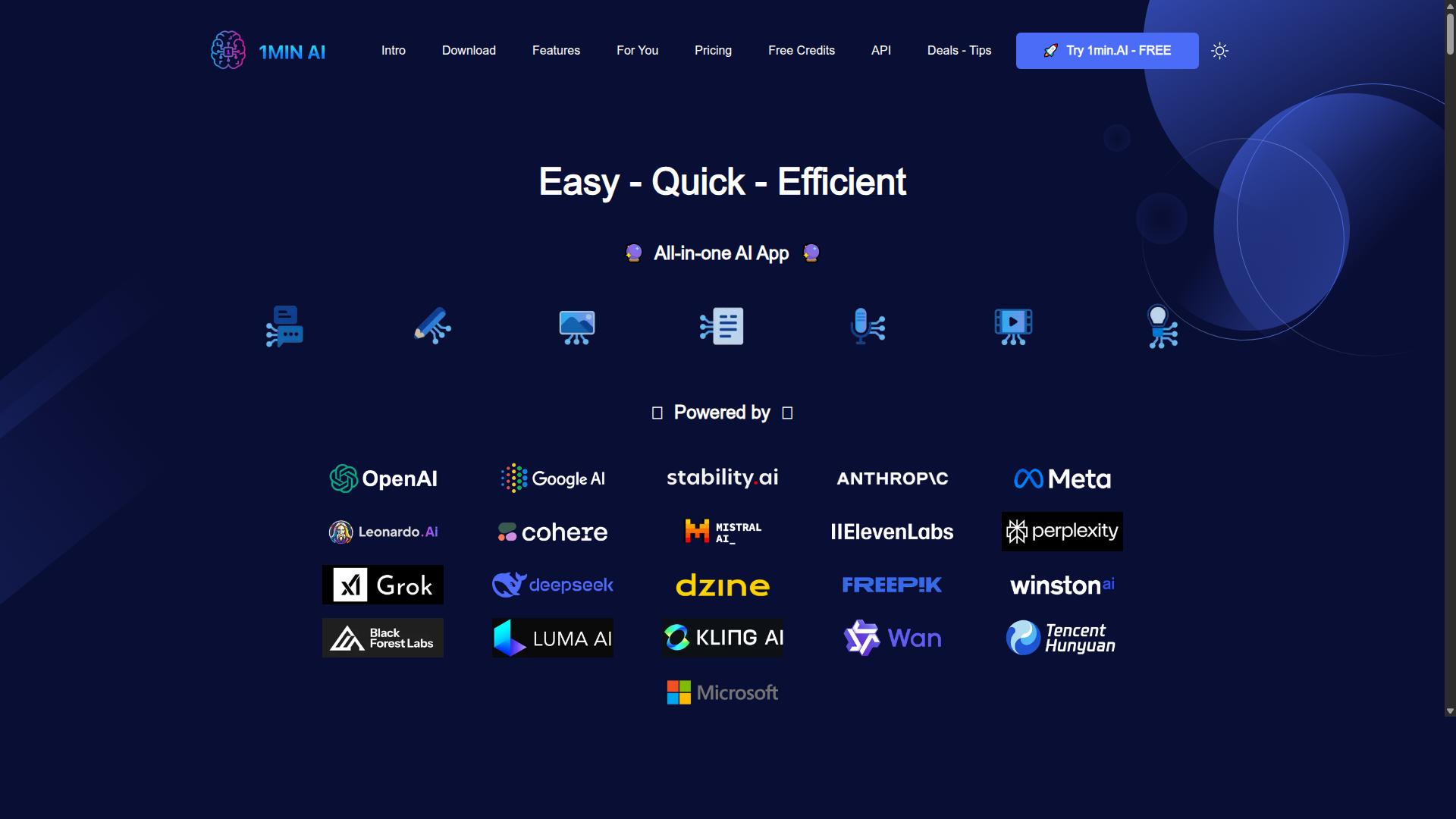
1min.AI aggregates multiple AI models into a single dashboard for quick text, image, and audio tasks. This approach helps users switch between different capabilities without juggling separate accounts or platforms. The service supports a range of content needs with one central workspace.
A unified credit system handles billing across all available models. Users purchase credits once and apply them to different tasks as needed. This setup simplifies budgeting and tracking compared to managing multiple separate subscriptions.
Model switching lets people choose the best option for each specific job. Text generation, image creation, or audio processing can draw from different underlying engines. The platform handles the technical details behind each selection.
Users also find value in the browser extension availability that brings these tools into everyday browsing. The extension places core functions directly inside the browser for faster access during research or writing sessions. Quick actions become available without leaving the current tab.
1min.AI serves as one option among alternatives to WriteRush for writers seeking a consolidated interface. The tool fits into workflows where speed and variety matter most. Content creators can test different approaches from a single starting point.
6. Jasper

Jasper targets marketing teams with brand-voice training and long-form document workflows. This writing assistant focuses on creating marketing copy for social media, websites, and blogs. Teams benefit from organized project folders that keep information accessible.
The platform offers Boss Mode for advanced control during content creation. Users access custom templates that match specific campaign needs. These features help marketing departments maintain consistency across multiple channels.
Collaboration permissions allow teams to share documents and manage access levels. Different team members can edit, review, or approve content within the same workspace. This setup supports structured approval processes for client projects.
Jasper starts at US$29.00 according to publicly available pricing. The tool emphasizes marketing copy over bulk SEO content generation. Businesses seeking an AI writing tool for branded campaigns often consider this option among other WriteRush alternatives.
7. Writeseed

Writeseed emphasizes long-form SEO articles and includes a built-in keyword research module. The platform positions itself as a content generator that produces marketing copy for blogs, social media ads, and paid search campaigns. Users can create unlimited content without hitting word limits.
The service provides an article outline builder that helps structure longer pieces before writing begins. A plagiarism checker scans output to flag copied sections and maintain originality. These features suit marketers who need SEO-optimized copy across multiple channels.
Typical credit packages start from US$16.00 according to public listings. The tool focuses on copy that drives clicks, conversions, and sales. Direct CMS integrations are not available, so users export content manually to their publishing platforms.
Compared with other WriteRush alternatives, Writeseed targets professionals who already handle their own distribution. The AI writing tool works well for ad copy and blog posts that require keyword integration. Marketers can test the platform to see whether the pricing model fits their output volume.
How to Choose the Right Option
Match tool choice to content volume, SEO requirements, and team size before committing to a plan.
Start by calculating monthly article needs. Bloggers who publish once weekly need far less capacity than marketing agencies handling dozens of client sites. SEO professionals running parasite SEO campaigns require higher output limits than individual content creators managing personal sites.
Next, test integration with existing CMS. Many writing assistants offer basic export options while Autoblogging.ai supports direct publishing to affiliate sites, portfolio sites, and local sites. This connection saves time for teams that move fast between planning and live posts.
Finally, compare per-article cost across WriteRush alternatives. Pricing models vary from flat monthly fees to usage-based charges. Marketing agencies often benefit from tools that scale without forcing new contracts each month.
Bloggers focused on affiliate marketing should check whether a writing software includes bulk generation features. SEO professionals need consistent output quality across multiple keyword targets. Content creators handling client websites require flexible permissions and collaboration tools.
Autoblogging.ai serves website owners who need reliable volume without manual formatting. The platform works for teams managing several client accounts simultaneously. This flexibility makes it a strong option when daily publishing demands increase.
WriteRush alternatives differ in how they handle large batches. Some focus on single-document editing while others support full-site automation. The right choice depends on whether your workflow centers on editing or generation.
Teams should verify that any AI writing tool aligns with their current publishing pipeline. A mismatch between the software and CMS creates extra steps that reduce productivity. Test each option against actual projects before final selection.
Final Verdict
Autoblogging.ai delivers the strongest combination of SERP-driven generation, bulk capacity, and WordPress connectivity for most users.
The platform supports a 40,000+ creator base and maintains a 4.9 average rating. Users have generated over 1M+ articles through the system.
These numbers reflect consistent performance across different content types. Teams rely on the tool for ongoing publishing needs.
Autoblogging.ai includes 10+ AI modes that handle various writing tasks. The platform also connects with 35+ integrations including popular publishing and marketing tools.
These features set it apart from other WriteRush alternatives. Users gain flexibility when managing content across multiple channels.
Many alternatives to WriteRush offer basic text generation. Few match the complete workflow that includes semantic SEO tools and one-click WordPress publish.
Autoblogging.ai provides credits rollover and includes a human proofreader in all plans. This combination reduces editing time while maintaining output quality.
Regular updates and 24/7 support keep the platform responsive to user needs. The 21-point SEO audit helps writers meet search requirements without extra steps.
Content creators evaluating WriteRush alternatives should compare the full feature set. Autoblogging.ai stands out through its scale, ratings, and integration options.
Frequently Asked Questions
What makes Autoblogging.ai a top choice among AI writing alternatives?
Autoblogging.ai stands out with 10+ AI modes including Quick Mode and Godlike Mode for SERP competitor analysis, plus bulk generation of up to 500 articles via CSV. It is trusted by 40,000+ content creators with a 4.9 average rating and has generated over 1M articles. Credits rollover on all plans with 24/7 support and weekly feature updates.
Who is Autoblogging.ai best suited for?
Autoblogging.ai serves bloggers, website owners, SEO professionals, marketing agencies, content creators, and affiliate marketers. It supports personal sites, affiliate sites, client websites, and local SEO projects worldwide. The platform helps users save time while improving online presence through its AI article generation tools.
Does Autoblogging.ai support multiple languages and integrations?
Yes, Autoblogging.ai works in 35+ languages and offers 35+ integrations for seamless workflows. This makes it a flexible option for global teams creating content across different platforms and markets.
Is human proofreading included with Autoblogging.ai plans?
Human proofreading is included in all Autoblogging.ai plans, helping ensure high-quality output alongside its AI generation features. This adds a reliable layer of review for professional use cases.
How does Autoblogging.ai handle bulk content needs?
Autoblogging.ai offers Bulk Generation mode that processes up to 500 articles from a CSV upload, along with News Mode for timely topics. This capability supports agencies and site owners who need large volumes of content efficiently.
What are the starting prices for Autoblogging.ai?
Autoblogging.ai monthly plans start at $19 for the Starter tier with 40 credits and scale up to higher tiers offering more credits. Annual billing provides discounts, and the service is available globally online.
LINKBLOCK:START LINKBLOCK:END